

There is a deep tension running through the national conversation on migration, one that has been fuelled by sensational headlines, inflammatory political soundbites, and a media landscape that often values outrage over accuracy. This tension is not abstract. It shapes the conditions in which people seeking safety must live, and it colours public attitudes in ways that make anti-racism work even more urgent.
Across the North East, we see two parallel realities. On one side, communities, residents and organisations working tirelessly to welcome, support, and stand beside people seeking sanctuary. On the other, a growing tide of misinformation circulated online, repeated uncritically, or deliberately amplified, that creates fear where none is needed and division where none should exist.
And this is where the problem lies: when so much of the public conversation is shaped by partial truths, sensationalism and political agendas, people are left unsure of what is real. That uncertainty creates fertile ground for confusion, resentment and mistrust. Too often, those feelings become directed at people who are already vulnerable.
At NEARC, we regularly see how misinformation fuels racism, not always through explicit hatred, but through misunderstandings that go unchallenged. Communities are not inherently hostile; they are often responding to the stories they are told. When those stories are inaccurate or deliberately distorted, real harm follows.
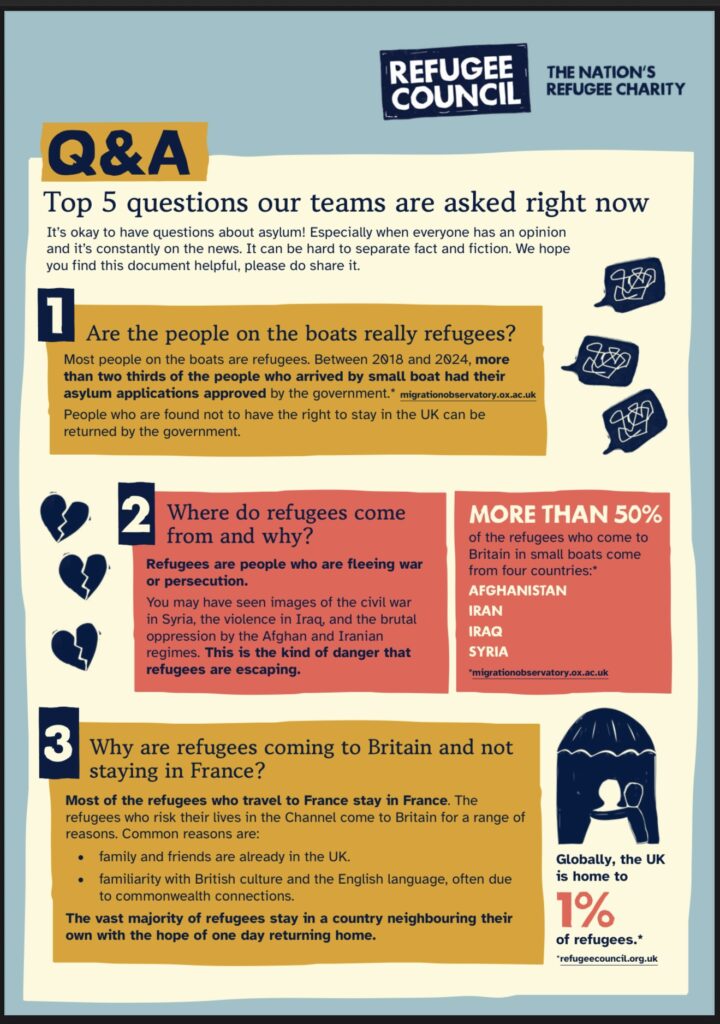
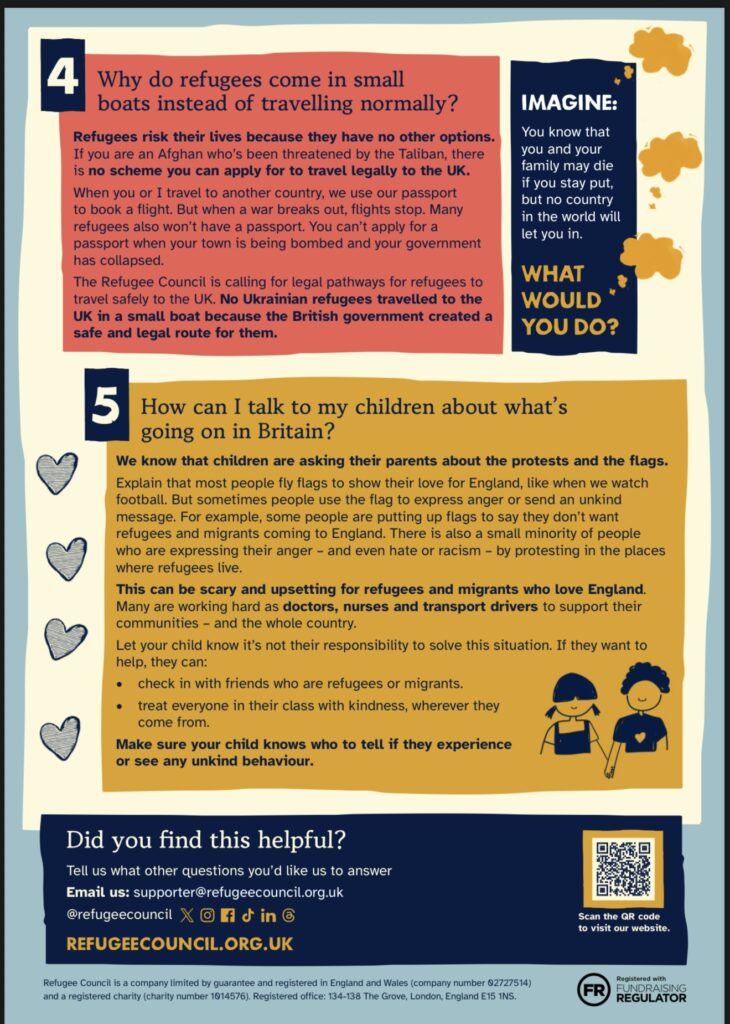
This is why clear, evidence-based information matters. Not because data alone changes hearts, but because truth offers a foundation for compassion, fairness and accountability. To support this, we’ve included a document produced by the Refugee Council – a respected national organisation with decades of frontline experience outlining five of the most common questions their teams hear from the public when it comes to people seeking asylum and refuge. These questions reveal something important: much of the fear circulating in the UK today comes from misinformation, not from lived reality.
Whether it’s confusion about what support people receive, misunderstandings about the asylum process, or claims about the “burden” placed on communities, the pattern is the same: people are reacting to narratives shaped not by facts, but by headlines and political messaging designed to divide.
We are also witnessing how parts of the media, alongside some political figures exploit these uncertainties to advance narratives that position migrants as threats, problems or strategic talking points. This approach is not only irresponsible; it undermines community cohesion and fuels the very hostility we work to challenge.
If we truly want the UK to be a safe home for everyone, including those who have lived here for generations and those who arrived seeking safety – then we must commit to the hard work of truth-telling. That means rejecting misinformation, challenging harmful narratives, and grounding our conversations in evidence rather than fear. A snapshot of the kinds of questions many people are wrestling with, and the factual answers that counter the myths is a place to start, but our responsibility goes further. It is about building a culture where truth is not sidelined by sensationalism,
The UK is at a crossroads. We can allow misinformation to shape our future, or we can insist on a narrative rooted in accuracy, dignity and shared humanity.