
Taking action now to create lasting impact will lead to a fairer and more inclusive world for us and future generations.
Research shows that people from ethnic and religious minorities in the UK face racism. We are carrying out research in the North East to understand the situation here in more detail.
Racism can take many forms – from violence and threats, to damage to property, poor treatment in services, or being treated unfairly at work. Often, these incidents are never reported.
While public attitudes have become more tolerant in the UK over the past 40 years, recent concern about immigration has led to more racism being reported.
Whether or not immigration rises or falls, our region is diverse, we should accept the people we have and play to the strengths this offers.


What influences public attitudes?
Human nature
People often divide into “us” and “them”, which can lead to fear and misunderstanding.
History
Ideas from Britain’s colonial past still influence how some people view others today.
Money worries
When people feel financially insecure, they may be more likely to blame others or fear difference.
Concerns about Immigration
The UK is becoming more diverse. In 2021, 26% of people identified as something other than “White British” (up from 12% in 2001). The North East is less diverse than the UK overall, but has changed.
Populism
Some politicians and media stir up racial divisions to gain support. Social media spreads these views quickly.
The law
The Equality Act 2010 protects people from race-based discrimination. But laws alone aren’t enough, discrimination is often not reported or hard to prove.
A framework for change
Why this matters?
Racism and discrimination are wrong
Everyone should be treated fairly, regardless of their race or religious identity. Sadly, many still face hate and barriers. For example, Islamophobia, especially towards women – is rising in the North East.
Inclusion helps everyone. It brings:
Economic benefits – Diverse and inclusive areas are more innovative, have better opportunities, and fewer social problems.
Social and cultural benefits – Inclusive communities are richer in culture, more peaceful, and more connected.
The region is changing
The North East is becoming more diverse. If we respond positively, our region will thrive. If not, racism will hold us back.
NEARC anti-racism language: a practitioner guide
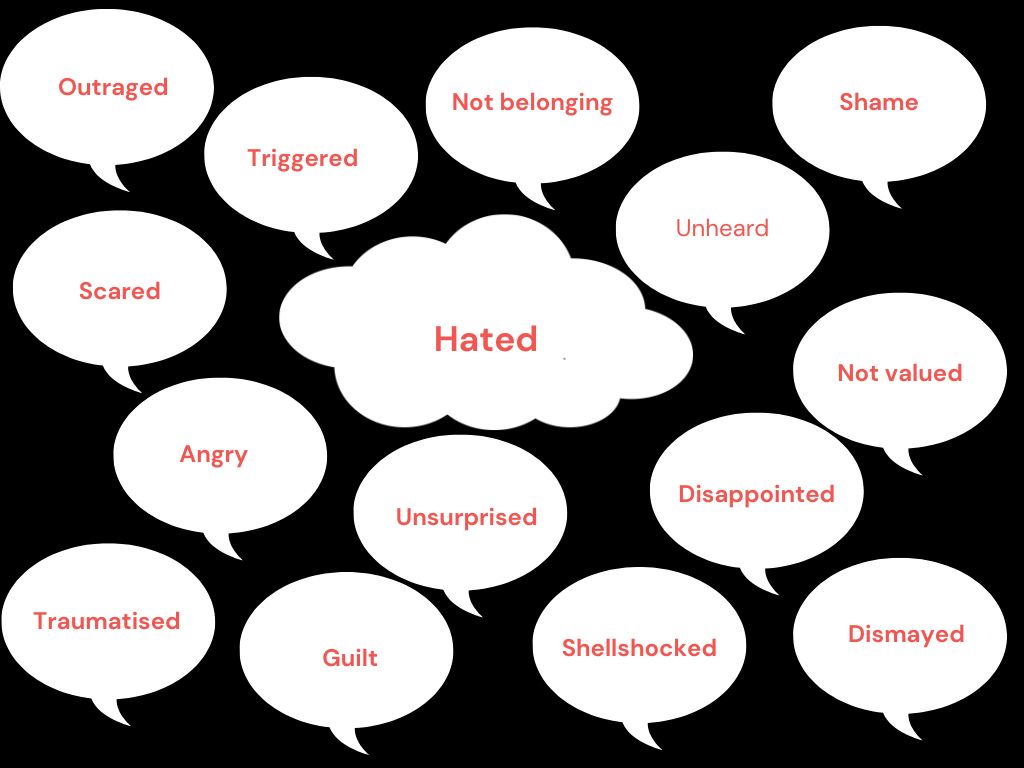
The impact of the riots in 2024
What does it mean to be anti-racist?
Acknowledge
- Acknowledge that interpersonal, institutional and systemic racism exists and do harm.
- Recognise how they manifest in wider society.
- Explore how they manifest in your organisation.
Adapted from ‘BRAP’.
Learn
- Provide high qualitylearning on racism, allyship and power/privilege.
- Engage in activities that challenge our world views of race.
- Consider using tools such as Harvard Implicit Association test to understand group biases.
Do
- Develop clear, authentic anti-racist actions/strategies.
- Increase representations across all levels including ensuring key decision-makers include people with lived experience.
- Make systems, policies, processes and culture more equitable and inclusive for people with lived experinces, with zero tolerance for racism.
- Actively challenge racial inequality internally and externally.